Snapchat, a prominent social media platform, offers users the ability to connect via ephemeral messages. However, some may contemplate deactivation due to privacy concerns or simply wanting a break. It’s crucial to approach this with a clear understanding of the steps to ensure a smooth process.
To deactivate your Snapchat account, start by visiting the official Snapchat website. From there, sign in using your credentials and navigate to the ‘My Account & Security’ section. Interestingly, after deactivation, Snapchat retains your data for 30 days, allowing users the option to reactivate their account if they change their mind within this period.
- Log in to your Snapchat account via the official website.
- Navigate to the “Account Settings” section.
- Select “Delete Account” under the “Manage My Account” menu.
- Re-enter your username and password for verification.
- Follow the on-screen prompts to confirm deactivation.

How To Deactivate Snapchat Account
Deactivating your Snapchat account involves a few simple steps. First, you’ll need to log into the Snapchat website using your credentials. Once logged in, navigate to the “My Account & Security” section. This is where you’ll find options related to account management. Make sure to read the instructions carefully before proceeding.
Backing up your data is recommended before deactivating your account. Ensure that any photos or messages you wish to keep are saved. When you’re ready, head to the account settings on the website. By doing this, you ensure you don’t lose any important memories stored in Snapchat.
To deactivate, you need to visit the specific deactivation page on Snapchat’s website. This page can be accessed via the “Account Information” section. Input your username and password, then follow the prompts to confirm the deactivation. Your account will enter a 30-day deactivation period, during which you can reactivate it if desired.
When deactivating, it’s essential to understand the implications. Your friends will not be able to contact you or view your profile during this period. Additionally, if you decide not to reactivate within 30 days, your account will be permanently deleted. Consider all the factors before making a final decision.
Step 1: Understand the Implications of Deactivation
Before deactivating your Snapchat account, it’s crucial to know what it entails. Your friends won’t be able to contact or find you on the platform. Any Snaps and messages you have will become inaccessible. This decision shouldn’t be made lightly.
Deactivating your account might also impact your social media interactions. Consider how this affects your communication with friends and family. You’ll miss the regular updates and stories shared by your contacts. This can lead to feeling disconnected from your social circle.
It’s essential to understand that deactivation is temporary but can lead to permanent deletion. During the 30-day deactivation period, you can reactivate your account. If you don’t, your account will be permanently deleted. Think about this before taking action.
It’s common to fear losing your digital footprint. You might lose access to photos, memories, and conversations. Make sure to back up any critical data. Understanding these implications helps you make an informed choice.
Step 2: Back Up Your Data
Saving your data before deactivating your Snapchat account is crucial. Access your saved Snaps, photos, and messages directly from the app. Ensure you download important content to your device. This avoids losing valuable memories. Properly backing up data is essential.
Snapchat does not automatically back up your data when you deactivate. You need to manually save your pictures and videos. Go through your Memories section to find content you want to keep. Follow the steps to save them on your phone or computer. This ensures all significant data is preserved.
Using cloud services can help store your backed-up content. Options like Google Drive and iCloud provide ample storage. Create folders to organize your photos and videos. Easy access to your memories is then ensured. Cloud storage is a reliable method.
Here’s how you can back up Snapchat data efficiently:
- Save photos and videos from Memories.
- Use external hard drives for backup.
- Organize files in dedicated folders.
Backing up your data prior to deactivation ensures you retain all important content.
Step 3: Access Account Settings
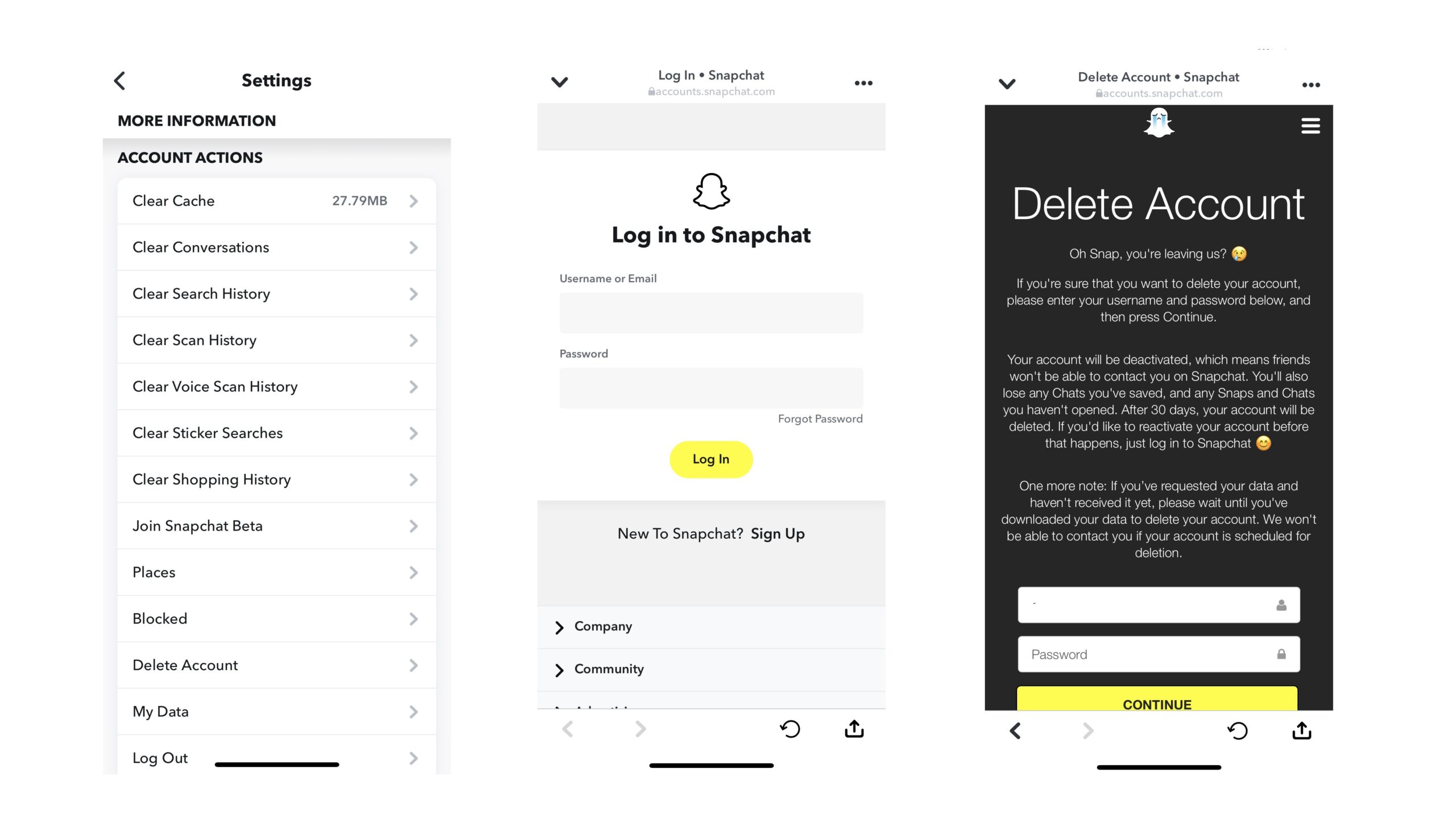
To start the deactivation process, you’ll need to access your Snapchat account settings. Open the Snapchat app and tap on your profile icon. Next, click on the gear icon located in the upper right corner. This will take you to the settings menu where you can manage your account options. Navigating to this section is simple and direct.
In the settings menu, you’ll find various options, including privacy, security, and account information. Scroll down until you see the “Account Actions” section. This is where the deactivation options are located. Being familiar with the settings layout will help save time. Ensure you’re in the right section before proceeding.
Within the “Account Actions” section, look for the option labeled “Delete Account.” Selecting this option will redirect you to a specific page for account deactivation. Follow the prompts given to continue with the process. Being precise at this step is important to avoid any accidental errors.
If you’re accessing settings via the web, go to the official Snapchat website instead. Log in with your credentials, then navigate to the account settings. The options will mirror those in the app. This alternative method provides flexibility for users who prefer using a desktop. Accessibility from multiple devices enhances user convenience.
Here is how to find the deactivation option:
- Access the Snapchat app or website.
- Navigate to your profile and open settings.
- Find the “Account Actions” section.
- Select “Delete Account” to proceed with deactivation.
These straightforward steps guide you to the account deactivation page seamlessly.
Step 4: Navigate to the Deactivation Page
After accessing account settings, the next step is to find the deactivation page. Within the “Account Actions” section, you’ll see the option labeled “Delete Account.” Click on this option to proceed. This action will redirect you to the deactivation page. Arriving at this page is a crucial part of the process.
The deactivation page asks you to input your username and password again for verification. This ensures that only the account owner can deactivate the account. Once the credentials are entered, you’ll see prompts guiding you through the final steps. Follow these prompts carefully. Accurate input guarantees that the process runs smoothly.
It’s worth noting that the deactivation process can only be initiated via the official Snapchat website. Using the app alone won’t suffice for this step. Here are the steps:
- Open the web browser and go to the Snapchat website.
- Log in with your username and password.
- Select “Delete Account” under “Account Actions.”
- Confirm your choice and follow the instructions.
Following these steps ensures proper navigation to the deactivation page.
If you face any issues, Snapchat’s support page can offer assistance. They provide troubleshooting tips for common problems. Reading these tips can help resolve issues quickly. It’s always helpful to know where to look for help. Proper navigation and troubleshooting make the process straightforward.
Step 5: Confirm and Complete Deactivation
After navigating to the deactivation page, you’ll need to confirm your decision. Double-check your username and password to ensure they’re correct. This step verifies your identity as the account holder. Following this, Snapchat will ask you to confirm deactivation. Make your choice carefully as this action begins the deactivation process.
Once you confirm, your account enters a 30-day deactivation period. During this time, your account is essentially paused. Friends cannot contact you or view your profile. However, you can still log back in to reactivate it. This grace period gives you time to reconsider your decision.
To complete the deactivation, follow the final on-screen prompts. These may include confirming your email and other account details. Ensure that you follow all instructions provided by Snapchat. Each step is essential for securely deactivating your account. Completing these steps will finalize the deactivation process.
Here’s a summary of the confirmation steps:
- Enter your username and password for verification.
- Confirm your intention to deactivate the account.
- Follow any additional on-screen prompts.
- Acknowledge the 30-day deactivation period.
These steps will ensure your account is successfully deactivated.
If you decide to reactivate your account within 30 days, simply log back in. This will restore your account and all associated data. Keep in mind that after 30 days, the deactivation process becomes permanent. Make sure your decision aligns with your long-term plans. Completing the deactivation process accurately is key.
Reactivating Your Snapchat Account
If you decide to reactivate your Snapchat account within 30 days of deactivation, the process is simple. Just log back into the app with your username and password. This action will prompt Snapchat to restore your account instantly. It brings back all your data, including friends, messages, and memories. Reactivating ensures nothing important is lost.
For successful reactivation, ensure you remember your login details correctly. If you’ve forgotten your password, Snapchat provides an option to reset it. Follow the instructions for password recovery on the login page. Accessing your account depends on inputting accurate information. Prepare beforehand to avoid any hassle with reactivation.
Be aware that attempting to reactivate after the 30-day window will not work. Your account will be permanently deleted post this period. Reactivation beyond 30 days necessitates creating a new account from scratch. Ensure timely reactivation if you wish to retain your existing account features and connections before it’s too late.
Here’s how you can easily reactivate:
- Open Snapchat app or website.
- Enter username and password.
- If necessary, use “Forgot Password” to reset credentials.
- Follow any additional prompts provided during login.
These steps facilitate quick access back into your previously deactivated account.
Once reactivated, enjoy reconnecting with contacts immediately. Resume interactions by sharing Snaps and updates as usual. It’s like picking up right where you left off without missing a beat. Maintain regular activity on the app for continued seamless connectivity with friends and family once restored.
Protecting Your Privacy on Social Media
Taking steps to protect your privacy on social media is crucial, especially on platforms like Snapchat. Regularly review your privacy settings to ensure your information is secure. Limit who can see your posts and interact with you. This helps control who accesses your content. Keeping privacy settings updated is essential.
Another way to safeguard your information is through password management. Use strong and unique passwords for your accounts. Avoid using the same password across multiple platforms. Consider using a password manager to keep track of them. This adds an extra layer of security to your social media profiles.
Be cautious about the information you share online. Avoid posting sensitive details such as your home address or phone number. Think before sharing personal moments publicly. Adjusting the visibility of your posts ensures they reach only intended audiences. Setting boundaries on sharing helps protect privacy.
Here are some practical tips for social media privacy:
- Regularly update privacy settings.
- Use strong, unique passwords.
- Limit the personal information you share.
- Adjust post visibility options.
These steps can significantly enhance your privacy online.
Stay informed about the privacy policies of the platforms you use. Understanding how your data is stored and shared helps you make informed decisions. If you’re worried about privacy, consider deactivating or deleting accounts temporarily. This keeps your information secure while giving you time to reconsider your online presence. Protecting privacy is a continuous effort.
Alternatives to Deactivating Your Snapchat Account
If you’re not ready to deactivate your Snapchat account, there are alternative actions you can take. One option is to temporarily disable notifications. This helps reduce distractions without losing access to your account. Adjust notification settings in the app to stay focused. This is a simple way to manage your time.
Another alternative is to limit your app usage through screen time settings. Set specific hours or days when you allow yourself to use Snapchat. This provides balance without completely removing the app from your device. You can monitor your social media habits effectively. Moderation can help manage your digital presence.
A more selective option is to customize your privacy settings. Restrict who can see your stories and send you messages. Snapchat offers various privacy controls to tailor your experience. This help maintain connections while ensuring your privacy. Customizing settings creates a safer environment for social media interactions.
Consider backing up and deleting specific content rather than deactivating the entire account. Clean up your profile by removing old posts and unwanted connections. If privacy is a concern, this approach can be effective. Regularly updating and managing content can enhance security. It’s a proactive way to maintain control.
Here are alternative steps to deactivation:
- Disable notifications temporarily.
- Set screen time restrictions.
- Customize privacy settings.
- Backup and delete specific content.
Utilizing these alternatives can help manage your Snapchat use without full deactivation.
Taking breaks from using the app can also be beneficial. Simply log out from the app for short periods. This temporary disengagement can help clear your mind. Maintaining a healthy relationship with social media is important. Explore various methods to stay connected while managing your usage effectively.